| |
| Tuesday, 27 October 2026 |
| JMW Turner and the Day Parliament Burned Down |
| Caroline Shenton |
 |
Lecture In the early evening of 16 October 1834, to the horror of bystanders in London, a huge ball of fire exploded through the roof of the Houses of Parliament, creating a blaze so enormous that it could be seen by the King and Queen at Windsor and from stagecoaches on top of the South Downs. In front of hundreds of thousands of witnesses, the great conflagration destroyed Parliament's glorious old buildings and their contents. No one who witnessed the disaster at Westminster would ever forget. Caroline Shenton Dr Caroline Shenton is an archivist, historian and an award-winning writer. She was formerly Director of the Parliamentary Archives in London, and before that was a senior archivist at the National Archives. Her books, lectures and study days focus on political art and heritage in peril. Caroline was Political Writer in Residence at Gladstone’s Library in 2017, has appeared at many literary festivals and on radio and TV. In 2023 she was appointed by the government to the Reviewing Committee on the Export of Works of Art and Objects of Cultural Interest (RCEWA), which considers whether national heritage destined for sale overseas should be saved for the nation. Awards, Qualifications & Memberships: Fellow of the Royal Historical Society. Fellow of the Society of Antiquaries. Winner of the Political Book of the Year Prize for 'The Day Parliament Burned Down' (2013) Image: https://commons.m.wikimedia.org/wiki/File:Joseph_Mallord_William_Turner_-The_Burning_of_the_Houses_of_Lords_and_Commons,_16_October_1834_-_1942.647_-_Cleveland_Museum_of_Art.jpg |
|
| Tuesday, 24 November 2026 |
| Tales from Vienna |
| Emma Johnson |
 |
Lecture Mozart, Haydn, Gluck, Beethoven, Schubert, Brahms, Strauss, Mahler, Bruckner, Schoenberg – it reads like a list of the great and good in classical music – but the amazing thing is that every one of these musical geniuses lived and worked in Vienna. With slides showing Viennese art and architecture as well as audio excerpts by Mozart, Beethoven, Brahms, Schubert, Johann Strauss and Mahler, this talk brings Vienna in its heyday to life. Vienna’s proximity to nature, its politics and its burgeoning middle classes were all factors in the city's cultural blossoming, but most important was Vienna’s geographical location at the heart of the Habsburg Empire and the "wine, women and song" philosophy of the Viennese We discover the special qualities that enabled one city to foster such a golden age for music. We'll also look at the developments in visual art, architecture, science and politics which formed the backdrop to this unparalleled explosion of musical genius and discuss why it ended so abruptly with the First World War. Lecturer With 30 CDs to her name, Emma Johnson is one of the few clarinettists to have performed as a soloist all over the world. She also enjoys giving talks about music - Woodwind Wizardry and The Poet John Miltonwere both broadcast by BBC radio and she has lectured about composers Gerald Finzi and Malcolm Arnold for the internet company Tonebase, as well as about Schubert and Brahms for Martin Randall Travel. Johnson studied Music and English at Pembroke College, Cambridge University, where she was the first woman to be made an Honorary Fellow. She was honoured by the Queen with an M.B.E. in 1996. Her charity, the Emma Johnson Music Foundation, gives workshops in primary schools to introduce children to instrumental music. |
|
| Tuesday, 08 December 2026 |
| Christmas at the National Gallery |
| Simon Whitehouse |
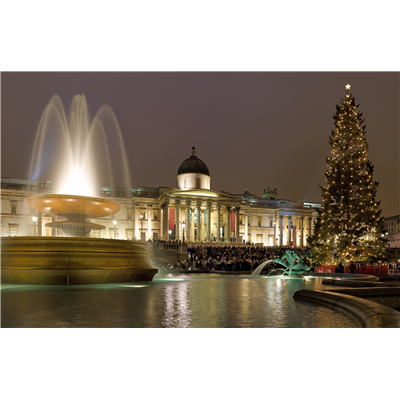 |
The Christmas lunch lecture. Image: The National Gallery, London |
|
| Tuesday, 26 January 2027 |
| The Subtle Science of Exact Art as Color in English Garden design and why garden design can rank as a finer. |
| Timothy Walker |
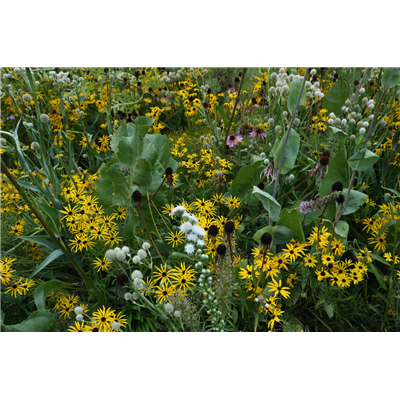 |
Lecture In 1882 Gertrude Jekyll wrote a short but seminal article in The Garden in which she urged the readers to “remember that in a garden we are painting a picture”. As an accomplished watercolour artist, Miss Jekyll was familiar with the principles of using colours, but she felt that in gardens these principles “had been greatly neglected”. This talk looks at how to apply these principles in designing a border, but it also looks at the ways in which a border is different from a painting. However, it goes further than this and looks at how contemporary work of the likes of Turner, Monet, Rothko, Jackson Pollack evolved in parallel with ideas about what a garden or border should. Lecturer I read Botany at University College Oxford. After graduation, I worked as a trainee at Oxford Botanic Garden, the Savill Garden Windsor, and the Royal Botanic Gardens Kew. In 1985 I was awarded a Master of Horticulture by the Royal Horticultural Society of London. From 1988 to 2014 I was director (Horti Praefectus) at the Oxford Botanic Garden. Between 1992 & 2000 the OBGHA won 4 gold medals at the Chelsea Flower Show London. In 2009 the Botanic Garden was awarded a Queen’s Anniversary Prize for providing imaginative educational programmes for adults, students, children, and the general public, thereby breathing new life into education for people of all ages and enriching their lives. In 2010 I was elected as a Fellow of the Linnaean Society of London. In the same year I presented a 3-part series of films on the history of botany on BBC4. Since 2014 I have been a tutor in Plant Biology at Somerville College, Oxford. |
|
| Tuesday, 23 February 2027 |
| Jewellery in Portraits: The Glittering Canvas, 1750-1850 |
| Clare Phillips |
 |
Lecture This lecture explores Art Deco jewellery during the 1920s and 30s. These were decades when jewellery was still widely worn in society and diamonds predominated. The title quotation - and indeed the term Art Deco - comes from the 1925 Paris Exposition internationale des arts décoratifs, at which a breathtaking selection of jewellery was shown. The lecture covers work by the finest makers of the period, especially those from Paris (Cartier, Boucheron, Fouquet, Van Cleef & Arpels and Chanel) alongside other major houses like Tiffany in New York. Lecturer Clare Phillips (MA Royal College of Art) has been a curator at the Victoria and Albert Museum since 1989. As a jewellery historian, she is a key part of the small team dedicated to the V&A’s jewellery collection. She has written extensively on jewellery: from Jewels & Jewellery, the definitive account of the V&A’s collection, and Jewelry - from Antiquity to the Present, Thames & Hudson’s accessible introductory text, to definitive works on the jewellery of Tiffany for Yale University Press and on Chaumet's tiaras for Thames & Hudson. In 2006 she curated the exhibition Bejewelled by Tiffany at Somerset House. In addition to her work with the V&A's permanent collection, she has been responsible for jewellery content within major V&A exhibitions, including - amongst many others - Art Nouveau: 1890-1914 and Frida Kahlo: Making Her Self Up. Image: Clare Phillips |
|
| Tuesday, 23 March 2027 |
| Awakening to Colour on the French Mediterranean |
| Antonia Gatward Cevizli |
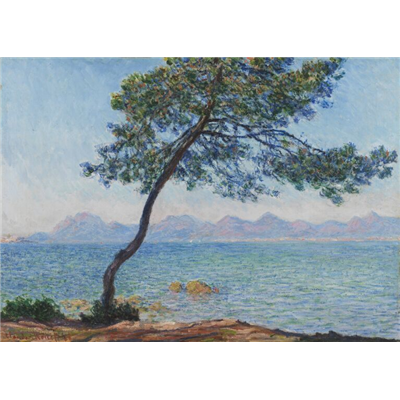 |
Lecture This lecture complements the Royal Academy exhibition 'Painting the French Riviera' running October 2026- Jan 2027. It explores the dramatic impact that the light and colour of the South of France had on the artists that flocked there. Our exploration will extend beyond the riviera as we move across France's Mediterranean coast from Collioure to Nice. Matisse and Derain's summer sojourn of 1905 will be a particular focus. The works that they painted that summer earned them the disparaging epithet 'fauves' or 'wild beasts' as a result of their vibrant colours and expressive brushwork. Paintings by Monet in Antibes, Signac in St Tropez and later Picasso and Klein on the Côte d'Azur will also be explored. Lecturer Dr Antonia Gatward Cevizli is an independent art historian specialising in both Italian Renaissance art and Ottoman art. She gained her PhD from the University of Warwick. Her publications focus on cultural and diplomatic exchange between the Italian city-states and the Ottomans. Antonia has lectured for a number of institutions including Sabancı University, Istanbul; Sotheby’s Institute of Art; the National Gallery; the V&A Academy and The Courtauld summer school. Her interests are wide-ranging and she also worked across the collections of both Tate Modern and Tate Britain as a professional guide. She has lived in Siena, Venice and Istanbul. Image: Antibes by Monet. Courtauld Public Domain |
|
| Tuesday, 27 April 2027 |
| Women in White: The Pre-Raphaelite Muse |
| Dr Alison Barker |
 |
Lecture This lecture examines how Pre-Raphaelite artists created ethereal images of their female models using a palette composed of shades of white - clothing them in diaphanous fabrics which revealed the figure, or rich swirling, lace and brocade. I look at iconic images such as John William Waterhouse’s Lady of Shallott and Ophelia and less well known works like Dante Gabriel Rossetti’s Lady Lillith and John Everett Millais’ The Northwest Passage. I explore not only the artists’ technique and the stories behind the images, but the fabrics, the setting, and the women themselves. This beautiful and richly illustrated lecture reveals the surprising use of white in the Pre-Raphaelite oeuvre. Lecturer Dr Alison Barker taught History and Art History at further and higher education for over twenty years and currently works at the University of Essex. She speaks widely to diverse groups on many historical and art historical topics, and has led guided tours at the British Museum and the National Gallery. Alison wrote her PhD thesis on the depiction of Saint George in art and has published work on his image in both England and Italy. She has presented Papers for the Renaissance Society of America in both Boston and Dublin. Her book, The Dissemination of Saint George in Early Modern Art has been recently published by Routledge. |
|
| Tuesday, 25 May 2027 |
| 300 Years of Blenheim Palace’s History |
| Antonia Keaney |
 |
Lecture An overview of Blenheim Palace’s rich and chequered history which looks at why the Palace took so long to build - and why it was never completed; the Dukes and Duchesses who made positive contributions to the Estate as well as those who did exactly the opposite - and, of course, a look at the Palace's greatest son - Winston Churchill. Lecturer Antonia Keaney joined Blenheim Palace in 2008 as a member of the Education Team, later becoming the Palace’s Social Historian and Digital Content Creator. Both roles have involved her curating or co-curating a number of Palace exhibitions including A Passion for Fashion – 300 Years of Blenheim Style upon which her recent book is based. |
|
| Tuesday, 22 June 2027 |
| British Art of the 1990's: How the Young British Artitsts (YBAs) Changed the World |
| Joshua White |
 |
Lecture In 1997 one exhibition radically changed the status of contemporary British art. This talk explains how a generation of young artists leaving art school in the 1980s radically transformed the status of British Art culminating in the controversial and popular 'Sensation' staged at the Royal Academy. The patronage of Charles Saatchi and the RA's chief curator, Norman Rosenthal, launched the careers of many successful British artists such as Damien Hirst and Tracey Emin. In what ways did Saatchi change the perception of contemporary art in Britain and the rest of the world? Lecturer Joshua White is an enthusiastic and experienced art historian and lecturer who thoroughly enjoys sharing his love and knowledge of fine art, photography and design with an audience. He is an experienced lecturer in 19th and 20th century European and American art, international contemporary art, photography, design and architecture. Teaching for 20 years at Christie’s, he can provide a lecture or study day with his listed talks or create bespoke talks on request, for example to coincide with a temporary exhibition, special event or anniversary. At Christie's, Joshua was director of The London Art Course and other courses in the field of modern and contemporary art, ranging from Impressionism and Surrealism to photography and modern sculpture. He has also taught on the client VIP courses for the Chairman's and President's offices at Christie's, the world's biggest art company. Drawing on his media experience as a former BBC journalist, Joshua is also a founder and presenter of The Art Channel, an online project documenting and interpreting art exhibitions and artworks in museums and commercial galleries. The channel has now received two million views. |
|
| Tuesday, 28 September 2027 |
| The Book of Hours: A Medieval Best Seller |
| Sally Dormer |
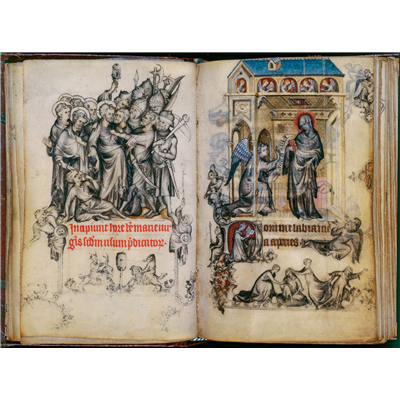 |
Lecture Books of Hours functioned as devotional aids or prayer books for laymen and women and were produced in prodigious numbers across Western Europe during the late Middle Ages. Today they are the most numerous and lavishly illustrated type of manuscripts to survive from the medieval period and yield fascinating insights into the practices of scribes, illuminators and patrons in an era when books were laboriously written and decorated by hand.
Lecturer Lecturer and tutor for the Early Medieval Year Course at V&A. Dean of 'European Studies' for 2 US Universities. Freelance lecturer for The Art Fund. Study tours, cruises and tour groups. BA (History) University of Durham; PhD (Medieval Manuscript illumination) and MA (Medieval History of Art) Courtauld Institute. The Nativity by Gerard David - from the Metropolitan Museum of Art, in the public domain. |
|
| Tuesday, 26 October 2027 |
| Iconography and the Hidden Meaning of Art |
| Mariska Beekenkamp-Wladimioff |
 |
Lecture Discover the deeper meaning hidden in the work of paintings of the past. Learn how to read the secrets of different objects, forms, shapes and colours included on the canvas. As the centuries passed, a language of symbols developed so that artists could tell stories with deeper and more intricate emphasis. This lecture, or lecture series, will cover a wide range of art of diverse kinds and origins, and examine the fascinating and complex range of different symbols no longer recognised by modern audiences, making it easier for you to interpret works of art. Lecturer Mariska combines an interdisciplinary academic background with international entrepreneurial success in the arts and education sector. She holds two Master’s degrees across distinct disciplines — first in Social Psychology from the University of Amsterdam, where she specialised in Decision-Making Behaviour and was encouraged to pursue doctoral research, and later an MA in Art History from the Courtauld Institute of Art, one of the world’s leading centres for the study of art history. Mariska completed her second MA as a mature student while raising three children, driven by her love for art, history and culture. Her specialist focus on 17th-century Dutch Baroque art has since become the foundation of an internationally recognised teaching and cultural programme. Image: Vase of Flowers, Jan Davidsz. De Heem, c. 1660, oil on canvas, 56.5 x 69.6 cm, National Gallery of Art, Washington |
|
| Tuesday, 23 November 2027 |
| The Golden Road to Samaritan; The Art, Architecture & Textiles of Uzbekistan. |
| Chris Aslan |
 |
Lecture Uzbekistan in the heart of Central Asia boasts glittering mosques, madrassahs and minarets in the Silk Road cities of Samarkand, Bukhara and Khiva. These contrast wonderfully with the brutalist Soviet buildings of Tashkent, Urgench and Nukus. This lecture is an overview of the country, and a primer for anyone thinking of visiting. We explore the Savitsky Museum in Nukus, with the second largest collection of Russian Avante Garde Art, collected at a time when these artistic styles were banned by the state. Lecturer Chris Aslan was born in Turkey and was raised there and in war-torn Beirut. This set him on a course for an adventurous life and he has spent two years at sea, and lived in Central Asia for 15 years. He started off in Khiva, a desert oasis in Uzbekistan, establishing a UNESCO workshop reviving fifteenth century carpet designs and embroideries, and becoming the largest non-government employer in town. He was deported as part of an anti-Western purge, and took a year in Cambridge to write A Carpet Ride to Khiva. Chris then spent several years in the Pamirs mountains of Tajikistan, training yak herders to comb their yaks for their cashmere-like down. Next came a couple more years in Kyrgyzstan living in the world’s largest natural walnut wood and establishing a wood-carving workshop. Since then, Chris has studied and rowed at Oxford and now divides his time between lecturing for the Arts Society, writing fiction and non-fiction in his mountainous home overlooking the sea in North Cyprus where he is overrun by cats, and returning to Central Asia to lead tours whenever he can, having left a large chunk of his heart there. His latest book is Unravelling the Silk Road. Image: Mosque |
|
| Tuesday, 14 December 2027 |
| Christmas Lunch Lecture - The Christmas Story in Renaissance Art |
| Paula Nuttall |
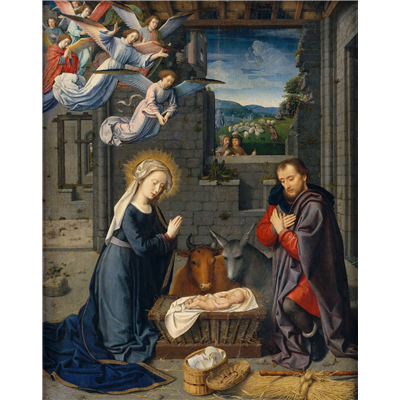 |
Lecture This lecture tells the Christmas story through a selection of well-loved paintings and illuminated manuscripts by Italian and Flemish artists, including Botticelli, Fra Angelico and Jan van Eyck, together with many less well-known images. From the Annunciation to the Nativity, the Journey of the Kings and the Flight into Egypt, it explores the rich symbolism of Christmas imagery, highlights the ways in which spiritual ideas and devotional practice shaped the depiction of the narrative, and introduces some less familiar aspects of the story, such as the Midwives and Joseph’s stockings.
Lecturer Specialist in Renaissance art, both Italian and northern European, on which she has published widely, notably From Flanders to Florence: the Impact of Netherlandish Painting 1400-1500 (Yale, 2004). Has collaborated on major exhibitions including Jan van Eyck: an Optical Revolution (Ghent, 2020). Before retiring in 2023 Paula was Director of the V&A Medieval and Renaissance Year Course, and has taught at – among others – the Courtauld Institute and the British Institute of Florence. She now focuses on the Arts Society, her own online courses, and research. Image: The Nativity |
|
| Tuesday, 25 January 2028 |
| Ludvig: The Life & Music of Ludvig von Beethoven |
| Raymond Holden |
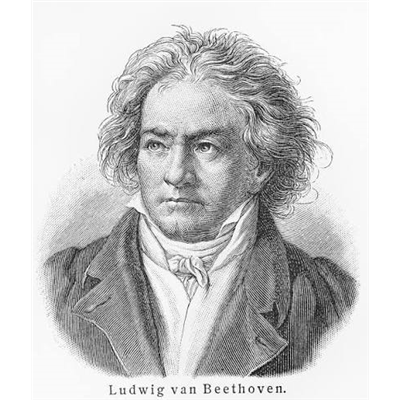 |
Lecture Rebel, iconoclast and revolutionary were all terms that quickly became associated with Ludwig van Beethoven. Born into a musical family in Bonn in 1770, he was quickly recognised as a keyboard player of exceptional skills and a composer of remarkable brilliance. After having lessons with Mozart, Haydn and Salieri in Vienna, Beethoven went on to conquer the Austrian capital with works that were both challenging technically and demanding aurally. But as his hearing began to deteriorate, Beethoven created a whole new sound-world that left musicians, critics and audiences scratching their heads in disbelief Lecturer Born in Australia, Professor Raymond Holden AM studied at Sydney, Cologne and London and is both a critically acclaimed and a multi-award winning writer, conductor, broadcaster and lecturer. He has performed with the Philharmonia Orchestra, the Danish Radio Symphony Orchestra, the BBC Symphony Orchestra, the Orchestra of the Emilia Romagna and the New Symphony Orchestra of London, and has been published regularly by Oxford, Cambridge and Yale University Presses, the Royal Academy of Music Press, Hans Schneider Verlag (Vienna) and by ICA, EMI and Warner Classics. Professor Holden has appeared on BBC Television and Radio, Servus TV (Germany), RAI Television and Radio, ABC Classic FM, 3MBS FM, Vision Australia Radio, SRF (Switzerland) and Classic FM (South Africa), and has spoken at many of the world’s leading music and literary festivals, universities, conservatoires and research institutes. He was appointed a Member of the Order of Australia (AM) in the 2019 Queen’s Birthday Honours List and is currently Emeritus Professor of Music at the Royal Academy of Music, London. |
|
| Tuesday, 22 February 2028 |
| Palmyra: The Bride of the Desert |
| Paul Roberts |
 |
Lecture In this talk we look at one of the most beautiful cities of the ancient world, the fabled city of Palmyra, in the Syrian desert. Palmyra arose on a trade route that brought silk, spices and other luxuries across the desert from the east. Her wealth and power are displayed in gorgeous monuments, while her people, wealthy, sophisticated and cosmopolitan, are preserved in their hauntingly beautiful funeral portraits. Palmyra became so powerful during the Roman empire that its warrior queen Zenobia challenged Rome itself. We’ll see Palmyra’s meteoric rise and its dramatic fall, its rediscovery by English lords, its influence on art and architecture, and then its desecration by Isis. Lecturer Dr Paul Roberts OBE is Research Keeper in the Department of Antiquities at the Ashmolean Museum of Art and Archaeology, Oxford University. Paul has been a lecturer with the Arts Society/NADFAS for over twenty years, has travelled extensively to societies across the UK, and has also lectured on numerous cruises in and around the Mediterranean. Like all of us, he enjoys the immediate contact of face to face meetings, but is happy to provide online lectures if desired. He studied Classics at the University of Cambridge, and Classical Archaeology at the Universities of Sheffield and Oxford. He then lived in Italy for several years, teaching and researching. He has travelled throughout the former lands of the Roman Empire, from Britain to Syria, and has excavated in Britain, Greece, Libya, Turkey and in particular Italy, where he is currently working on a Roman Villa in the Molise region of the Central Apennines. |
|